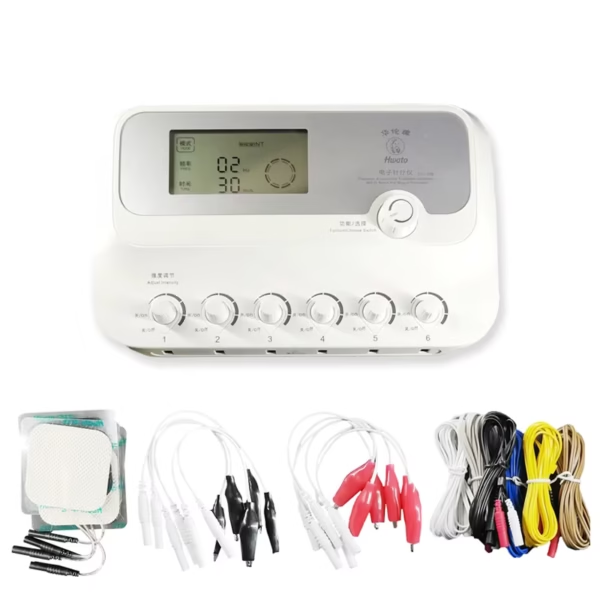
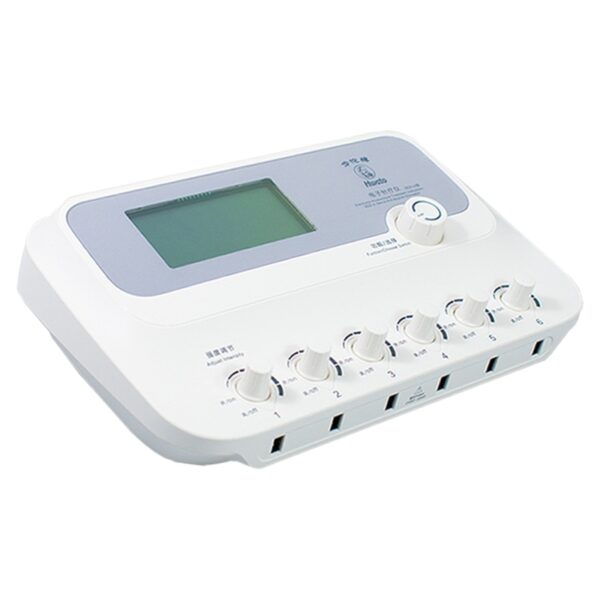
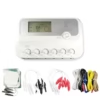


The Hwato SDZ-III Nerve & Muscle Stimulator is a professional-grade electro-acupuncture and neuromuscular therapy device, engineered for clinical physiotherapy, acupuncture treatment, pain-management and rehabilitation environments.
Building on the proven SDZ-II platform, the SDZ-III adds:
-
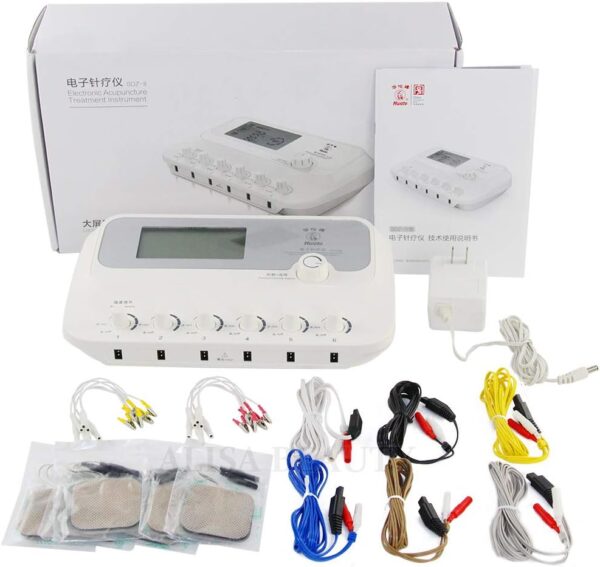
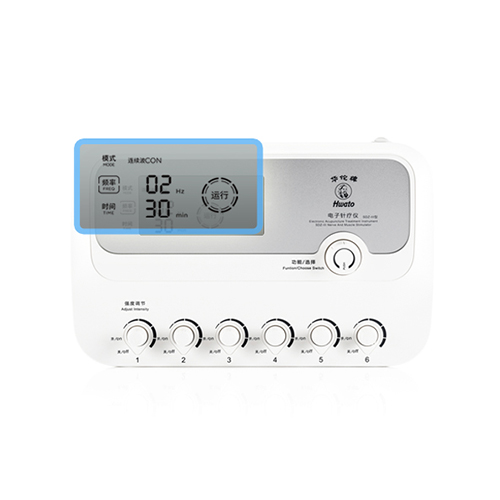
a large LCD screen for precise output monitoring
-
simplified single-dial control operation
-
enhanced clarity for mode, frequency and timer settings
The device delivers low-frequency TENS / EMS / electro-acupuncture stimulation through either:
-
adhesive TENS pads, or
-
acupuncture needles via metal clip connectors
allowing flexible treatment protocols depending on therapy requirements.
The 6-channel output system supports simultaneous treatment across multiple anatomical regions, making it suitable for busy clinics and structured rehabilitation programs.
Engineered for reliability, usability and consistent therapeutic performance.
🔧 Recommended Clinical Applications
Suitable for:
-
neuromuscular stimulation therapy
-
pain-management & neuro-modulation
-
muscle tension & spasm reduction
-
circulation & tissue recovery support
-
electro-acupuncture treatment programs
Common indications include:
-
neuralgia & nerve pain
-
sciatica & radiculopathy
-
muscle strain & soft-tissue trauma
-
tendon & joint pain syndromes
-
rehabilitation & recovery therapy
(Use under professional guidance.)
🔗 Explore More PT Equipment (Internal SEO Link)
Explore all our Physical Therapy Machines and Devices:
https://skymedical.shop/product-category/physical-therapy-rehabilitation/physical-therapy-machines-devices/
TECHNICAL SPECIFICATIONS OF THE Hwato SDZ-III Nerve & Muscle Stimulator
Device Type
-
Electro-Acupuncture / TENS / EMS Stimulator
-
Model: SDZ-III
-
Channels: 6 channels
Output & Performance
-
Output intensity: ≤10mA (250Ω load)
-
Frequency range: 1–100Hz adjustable
-
Output pulse type: low-frequency stimulation
Wave Modes
-
Continuous
-
Dense / Disperse
-
Intermittent
Display & Controls
-
Large LCD digital screen
-
Single-dial control for:
-
mode
-
frequency
-
timer
-
-
Auto power-off after inactivity
Power Supply
-
Battery operation or AC adaptor
-
AC input — regional compatible
Included Accessories
-
6 × lead wires
-
6 × pairs of TENS pads (12 pads total)
-
12 × metal alligator clips
-
Power adaptor
-
User manual
PRODUCT POSITIONING
Hwato SDZ-III Nerve & Muscle Stimulator IS Designed for:
-
physiotherapy & rehabilitation clinics
-
acupuncture & electro-acupuncture practices
-
sports therapy & neuromuscular care
-
multi-zone TENS/EMS treatment environments
Compared to SDZ-II:
-
same 6-channel capability
-
adds LCD screen + easier control interface
-
better suited for clinical workflow & monitoring
❓ PRODUCT FAQ
Is the SDZ-III a professional-grade therapy device?
Yes — it is designed for clinical physiotherapy and electro-acupuncture treatment.
What is the difference between SDZ-II and SDZ-III?
The SDZ-III features:
-
a large LCD screen
-
simplified single-dial control
-
improved monitoring clarity
while maintaining the same 6-channel performance.
Can it be used with acupuncture needles?
Yes — via metal clip connectors for electro-acupuncture therapy.
Does it support TENS pads as well?
Yes — it can operate with adhesive electrodes.
What waveform modes are included?
Continuous, Dense/Disperse and Intermittent modes.