


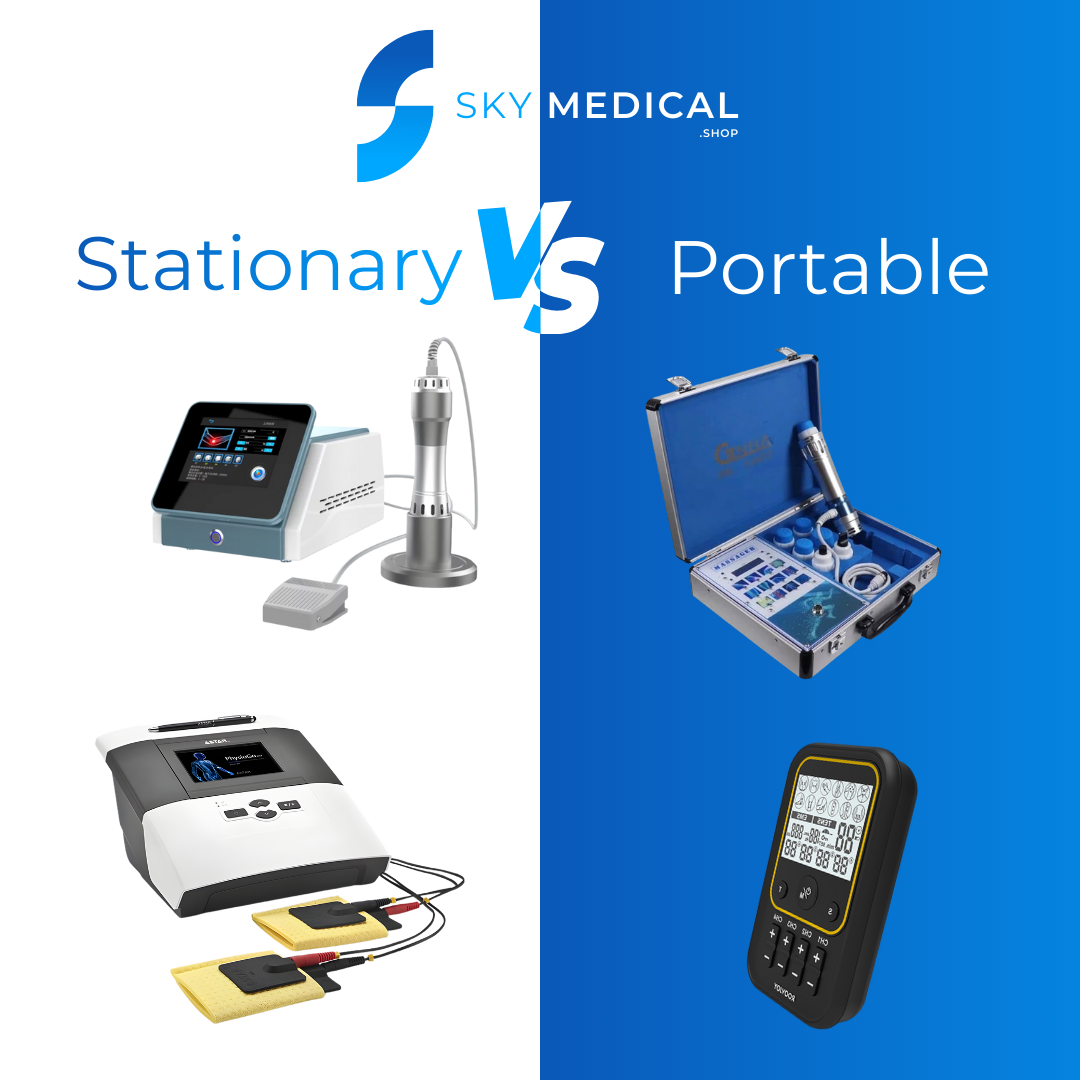
When investing in physical therapy equipment, one of the most important decisions professionals face is choosing between portable and stationary physical therapy equipment. This decision affects not only cost, but also treatment quality, workflow efficiency, patient volume, and long-term scalability.
Many clinic owners and therapists assume that stationary equipment is always superior, while others believe portable equipment is enough for all situations. In reality, each option serves a different purpose, and the right choice depends on how, where, and how often the equipment will be used.
This in-depth buying guide compares portable vs stationary physical therapy equipment across features, performance, durability, clinical use, and long-term value, with detailed examples across multiple modalities.
Understanding Portable vs Stationary Physical Therapy Equipment
Before comparing products, it’s important to clearly define what each category means in real clinical practice.
Portable Physical Therapy Equipment
Portable physical therapy equipment is designed for flexibility and mobility. These devices are typically:
- Lightweight
- Compact
- Easy to transport
- Quick to set up and store
Portable equipment is commonly used in:
- Home care and domiciliary therapy
- Mobile physiotherapy services
- Early-stage or space-limited clinics
- Multi-purpose treatment rooms
While portable equipment often has fewer advanced features, it is highly effective for core treatments when used correctly.
Stationary Physical Therapy Equipment
Stationary physical therapy equipment is designed for fixed clinical environments and high treatment demand. These devices are typically:
- Larger and heavier
- Installed permanently or semi-permanently
- Built for continuous daily use
- Equipped with advanced clinical features
Stationary equipment is most commonly used in:
- Established physical therapy clinics
- Rehabilitation centers
- Sports rehabilitation facilities
- Neurological and post-operative rehab settings
Key Differences Between Portable and Stationary PT Equipment
1. Mobility, Space, and Workflow
Portable equipment
- Requires minimal space
- Can be moved between rooms or locations
- Ideal for clinics with limited square footage
- Fits well into shared treatment spaces
Stationary equipment
- Requires dedicated space
- Becomes part of the clinic layout
- Supports structured, high-volume workflows
- Improves efficiency in busy clinics
If space is limited, portable equipment offers immediate flexibility. If space is available, stationary equipment improves long-term workflow.
2. Power, Features, and Treatment Capabilities
Portable equipment
- Covers basic and intermediate treatment needs
- Typically has fewer channels or intensity levels
- Suitable for one patient at a time
Stationary equipment
- Offers higher output and precision
- Supports multiple treatment modes
- Designed for advanced protocols and longer sessions
The difference is not about “better” or “worse”, but about treatment demand and complexity.
3. Durability and Daily Usage
Portable equipment
- Designed for moderate daily use
- Excellent for flexible schedules and mobile work
- May wear faster under very high patient volume
Stationary equipment
- Built for continuous use throughout the day
- More durable components
- Better suited for clinics with constant patient flow
Product-Level Comparisons by Modality
This is where the portable vs stationary decision becomes most important.
Electrotherapy: Portable vs Stationary Units
Portable electrotherapy (EMS)
- Lower cost
- Easy to transport
- Ideal for home care, mobile therapists, and small clinics
- Suitable for pain management and muscle stimulation
Stationary electrotherapy units
- Multiple channels for treating several patients
- Wider range of programs and parameters
- Better for busy clinics with multiple treatment rooms
➡️ Best practice:
Many clinics start with portable EMS units and upgrade to stationary systems as patient volume increases.
Ultrasound Therapy: Portable vs Stationary
Portable ultrasound machines
- Compact and affordable
- Effective for standard soft tissue treatment
- Easy to use in clinics or home settings
Stationary ultrasound units
- Higher power stability
- Dual channels and advanced frequencies
- Better for intensive or specialized treatment protocols
➡️ Best practice:
Portable ultrasound is sufficient for most early needs; stationary units add value in high-demand environments.
Shockwave Therapy: Why It Is Almost Always Stationary
Shockwave therapy is a clear example where stationary equipment is usually the better choice.
Stationary shockwave therapy machines
- Deliver consistent energy output
- Support radial or focused shockwave
- Designed for chronic pain, tendinopathies, and sports injuries
- Require stable installation for safety and precision
Portable shockwave options exist but are generally limited and not ideal for frequent clinical use.
➡️ Best practice:
Shockwave therapy should be added as a stationary service expansion, not a portable starter tool.
Biofeedback Equipment: Portable vs Stationary Systems
Portable biofeedback devices
- Basic EMG or muscle-activation feedback
- Useful for home programs and basic motor control training
- Suitable for low-volume or mobile use
Stationary biofeedback systems
- Advanced EMG analysis
- Multi-sensor integration
- Ideal for neurological rehab, pelvic floor therapy, and sports performance
➡️ Best practice:
Portable biofeedback supports flexibility; stationary biofeedback supports specialization.
Cryotherapy & Compression Equipment
Portable cryotherapy tools
- Ice packs, cold packs, portable compression units
- Easy to store and transport
- Essential for daily use
Stationary cryotherapy systems
- Cold + compression machines
- Designed for sports and post-operative rehab
- Require space and higher investment
Rehabilitation Structures: Mostly Stationary by Nature
Some rehabilitation tools are inherently stationary:
- Parallel bars
- Pulley cages
- Bobath tables
- Training stairs
These cannot be replaced by portable alternatives and are essential for gait training, neurological rehabilitation, and functional recovery.
Cost Comparison: Short-Term Savings vs Long-Term Value
Portable equipment
- Lower upfront cost
- Faster ROI for startups
- Ideal for testing services
Stationary equipment
- Higher initial investment
- Better long-term durability
- Supports advanced services and higher revenue
The smartest clinics balance both rather than choosing only one.
Portable vs Stationary Equipment by Use Case
Physical Therapy Clinics
Clinics often start with portable electrotherapy and ultrasound, then add stationary equipment such as shockwave therapy, traction, and biofeedback as demand grows.
Home Care & Mobile Physiotherapy
Portable equipment is the clear winner, offering flexibility without sacrificing treatment effectiveness.
Rehabilitation & Sports Centers
Stationary equipment is essential due to higher patient volume, advanced protocols, and structured workflows.
Common Buying Mistakes to Avoid
- Choosing equipment based only on price
- Buying stationary machines too early
- Underestimating space requirements
- Assuming portable equipment is “low quality”
How to Make the Right Decision
Ask yourself:
- Where will I use this equipment most?
- How many patients will I treat daily?
- Do I need flexibility or high capacity?
- Am I planning to specialize or expand services?
Answering these questions will guide you to the right mix of portable and stationary equipment.
Conclusion
Choosing between portable vs stationary physical therapy equipment is not about picking one over the other — it’s about understanding when and where each makes sense.
Portable equipment offers flexibility, affordability, and mobility. Stationary equipment delivers power, durability, and advanced treatment capabilities. The most successful clinics and professionals use both strategically, upgrading as their practice grows.